

Sardines in Japan: The First Fish to Be Tinned
The history of Japanese canning begins much earlier than many people realize. At the end of the 19th century, during the Meiji period (1868–1912), Japan was rapidly modernizing and adopting Western technologies, including canning methods. It was then that sardines (iwashi) became the first fish to be tinned in Japan , a choice not by chance.
Sardines were inexpensive, highly nutritious, and already deeply rooted in everyday Japanese cuisine - dried, salted, fermented, or cooked with miso. The first canneries began experimenting with iwashi in the late 19th century, aiming to create a product that would be durable, easily transported, and suitable for both civilians and the military and navy.
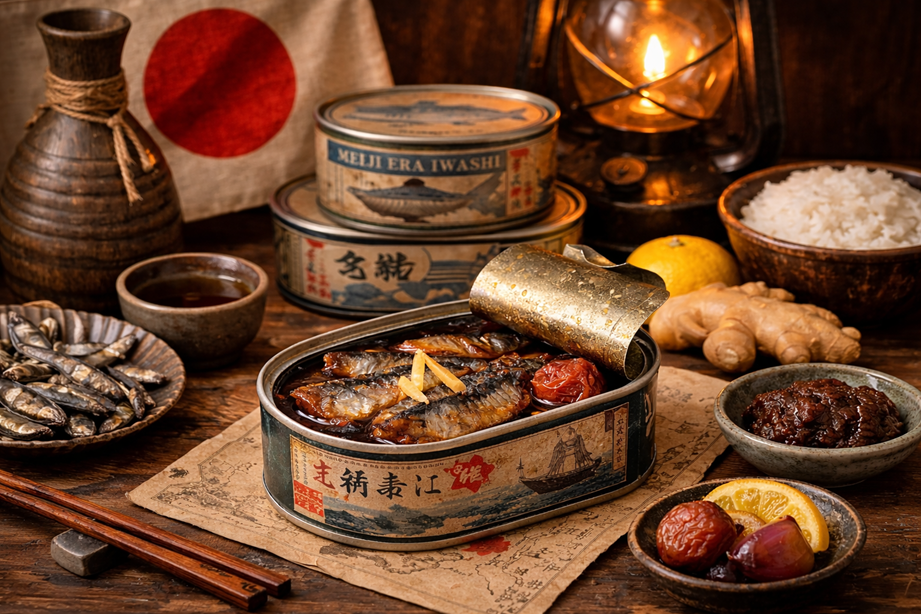
Unlike in Europe, where canning often meant a simple combination of fish and oil, in Japan, from the very beginning, there was an attempt to preserve the flavors of traditional cuisine in the can: soy sauce, miso, ginger, plums (ume). Thus was born a unique direction in Japanese sardine canning - not industrial, but culinary.
How did it happen that the sardine became the first?
In the late 19th century, as Japan adopted Western canning technology, the choice was logical: preserve what was familiar, abundant, and consumed daily. Sardines have been a part of Japanese cuisine for centuries - dried ( niboshi ), boiled in broths, fried, or stewed in home-cooked dishes.
That is why it became the first canned fish. Not as a symbol, but as a functional food, to which the entire Japanese philosophy of taste was later applied.
Tinned fish in Japan: from function to gourmet
Unlike in Europe, canned fish has never been romanticized in Japan. It originated as a city food, a product of the military and reserves, but over time it became an extension of home cooking in a can. Japanese canned sardines often replicate traditional stew recipes (nimono), so they are perceived not as "raw materials" but as a prepared, balanced dish.
Premium Japanese Sardine Recipes in a Tin
This is where the fun begins for foodies. In Japan, "premium" doesn't mean fancy packaging - it's about the recipe, balance, and texture.
Sardines in soy sauce - the classic that started it all
Iwashi no Shōyu-ni (いわしの醤油煮). This is the most archetypal Japanese sardine preserve. The sardines are slowly simmered in soy sauce, often with a little sugar or mirin, until the flavor becomes deep but not overpowering. It is a preserve that pairs perfectly with rice and brings out the true umami sensation.
Sardines with miso - umami concentrate
Iwashi no Miso-ni (いわしの味噌煮). Miso gives sardines a warm, fermented depth and naturally rounds out the flavor. It is one of the most appreciated gourmet options in Japan - delicate, rich and very "Japanese". A great choice for those who are looking for harmony rather than intensity.
Sardines with ginger - purity and balance of flavors
Iwashi no Shōga-ni (いわしの生姜煮). The ginger here plays a structural role rather than a spice. It adds freshness, balances the fat of the fish, and leaves a clean aftertaste. This recipe is often considered the most elegant and best suited to sake.
Sardines with ume plums - refined sourdough
Iwashi no Ume-ni (いわしの梅煮). Ume plums provide a subtle tartness and fermented depth that is particularly appealing to experienced gourmets. This is a niche but highly regarded recipe, often considered an upper-class choice.
Sardines with yuzu - a modern premium accent
Iwashi no Yuzu-fūmi (いわしの柚子風味). Yuzu citrus provides a light aromatic freshness and combines tradition with modern Japanese gastronomy. This is one of the most appealing Japanese sardine recipes for Western gourmets.
Taste philosophy: less fat, more meaning
What makes Japanese canned sardines stand out is that they are not "all about oil." Here's the key:
- umami,
- texture integrity,
- balance between saltiness, sweetness and acidity.
Sardines are often perceived as part of a dish - eaten with rice, vegetables, or used as an ingredient.

Pairing with Sake and Wine: The Gourmet Context of Japanese Sardines
Japanese canned sardines are rarely eaten alone—they almost always have a “partner.” Unlike in the Mediterranean region, where wine is the most common choice, in Japan the natural companion is sake , but certain recipes open up beautifully with wine as well.
With sake, Japanese sardines reveal their most delicate side:
- Iwashi no Shōyu-ni and Iwashi no Miso-ni : Pairs well with Junmai or Junmai Ginjo sake – the bright umami enhances the depth of the dish but doesn't overpower the fish.
- Iwashi no Shōga-ni : goes especially well with dry, light sake, which brings out the freshness of the ginger and gives a clean aftertaste.
- Iwashi no Ume-ni : best served with a lightly sweet or semi-dry sake that balances the acidity of the plums.
With wine, these preserves open up differently - more European, but still refined:
- sardines prepared with miso or soy sauce go well with dry Riesling, Chenin Blanc or Grüner Veltliner - the acid and minerality balance the umami;
- Iwashi no Yuzu-fūmi goes particularly well with light, aromatic white wines or even dry sparkling wines;
- The most important thing is to avoid overly heavy, tannic red wines - they overshadow the delicate Japanese structure.
This aspect of the pairing once again demonstrates that Japanese canned sardines are not a snack from a can, but a full-fledged gastronomic experience.











,%20Japan%20was%20rapidly%20modernizing%20and%20adopting%20Western...)
Leave a comment
This site is protected by hCaptcha and the hCaptcha Privacy Policy and Terms of Service apply.